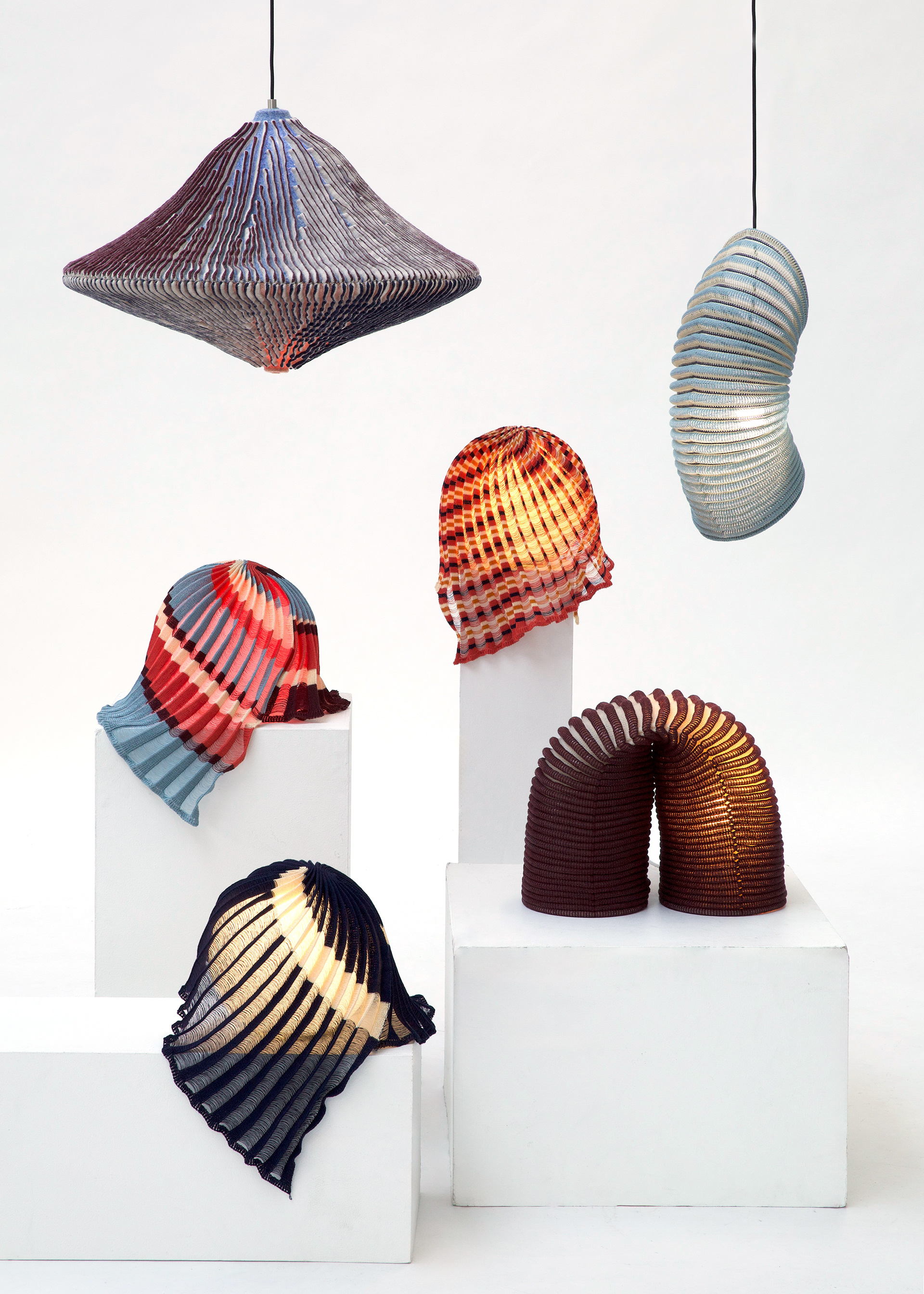
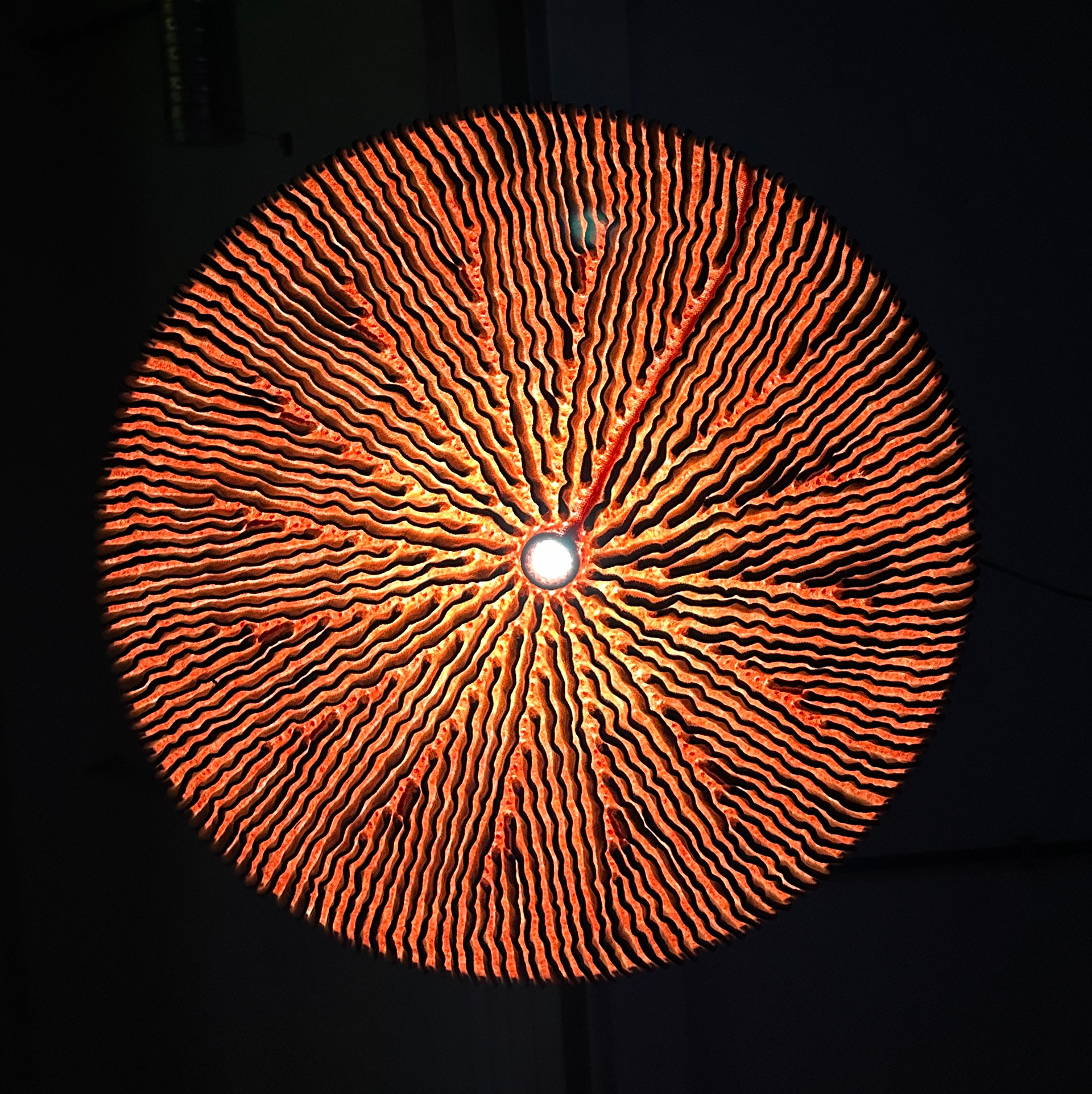
Linear light is a collection of illuminated objects that showcase a variety of knitted textiles. The project explores how to create linear structures and how they relate to primary forms. Adding variation in colour and density to create textiles that change expression with the lighting conditions.
The idea of the project is rooted in the search for alternative ways of creating zero waste objects for interior design.
Three families
This collection consists of six objects grouped into three categories that treats knitted structures, light, form and lines in their own way. The first category is based on the cone as primary form. Two textile cones are placed with their wide base facing each other and each of these has their own colour way where one gives off red light and one blue light. This is because of the corresponding colour being plated on the inside of each part. Ripples within the knitted structure is used to create lines that highlight the form and change in density. Wool yarn is used in the base for its porosity and light spreading properties contrary to the linen that is placed on top of the ripples that is a denser and stiffer fibre that makes the ripples create a slight wave.
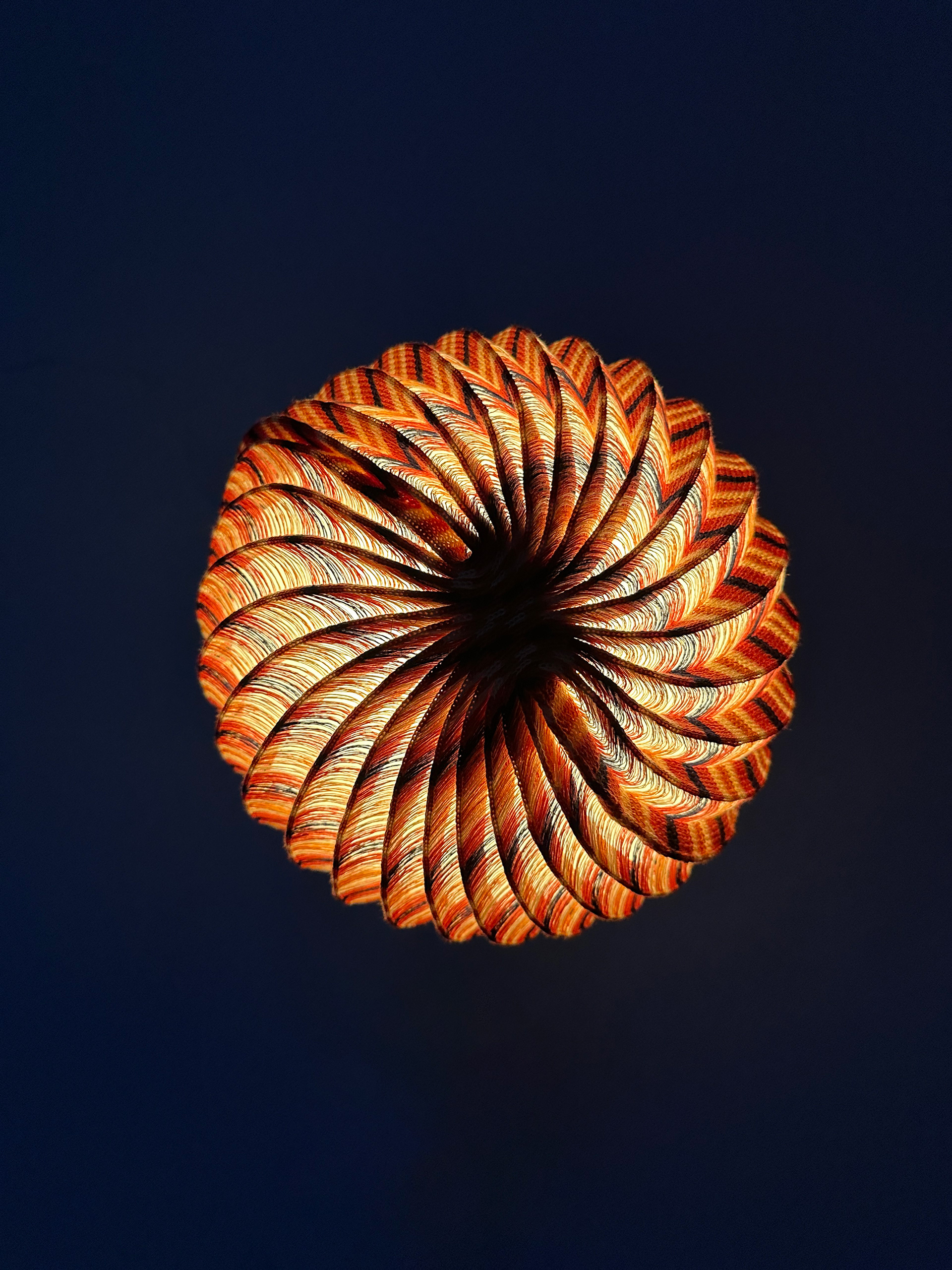
The second category consists of three pieces where the knitted textiles are draped over globe lights. This open pleated structure with floats naturally falls this way due to the needle placement in the knitting machine. Coloured stripes vary between warm, cool, light and dark to show a range of how these colours interact with a colour changing light bulb. These textiles are made in pure linen for its ability to hold form, draping properties, colour richness and the high density of the fibre creating a net-like structure of the piece.
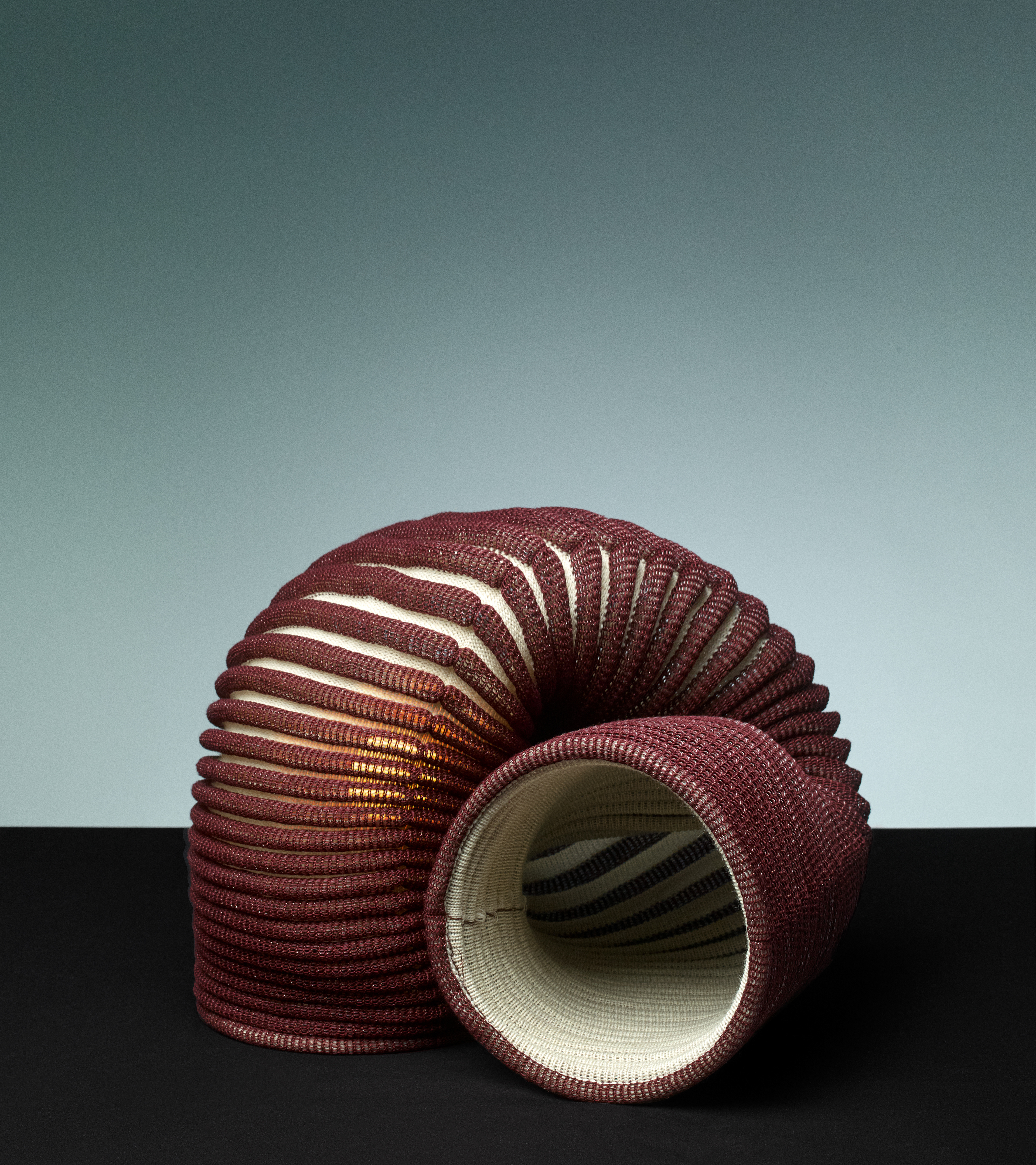
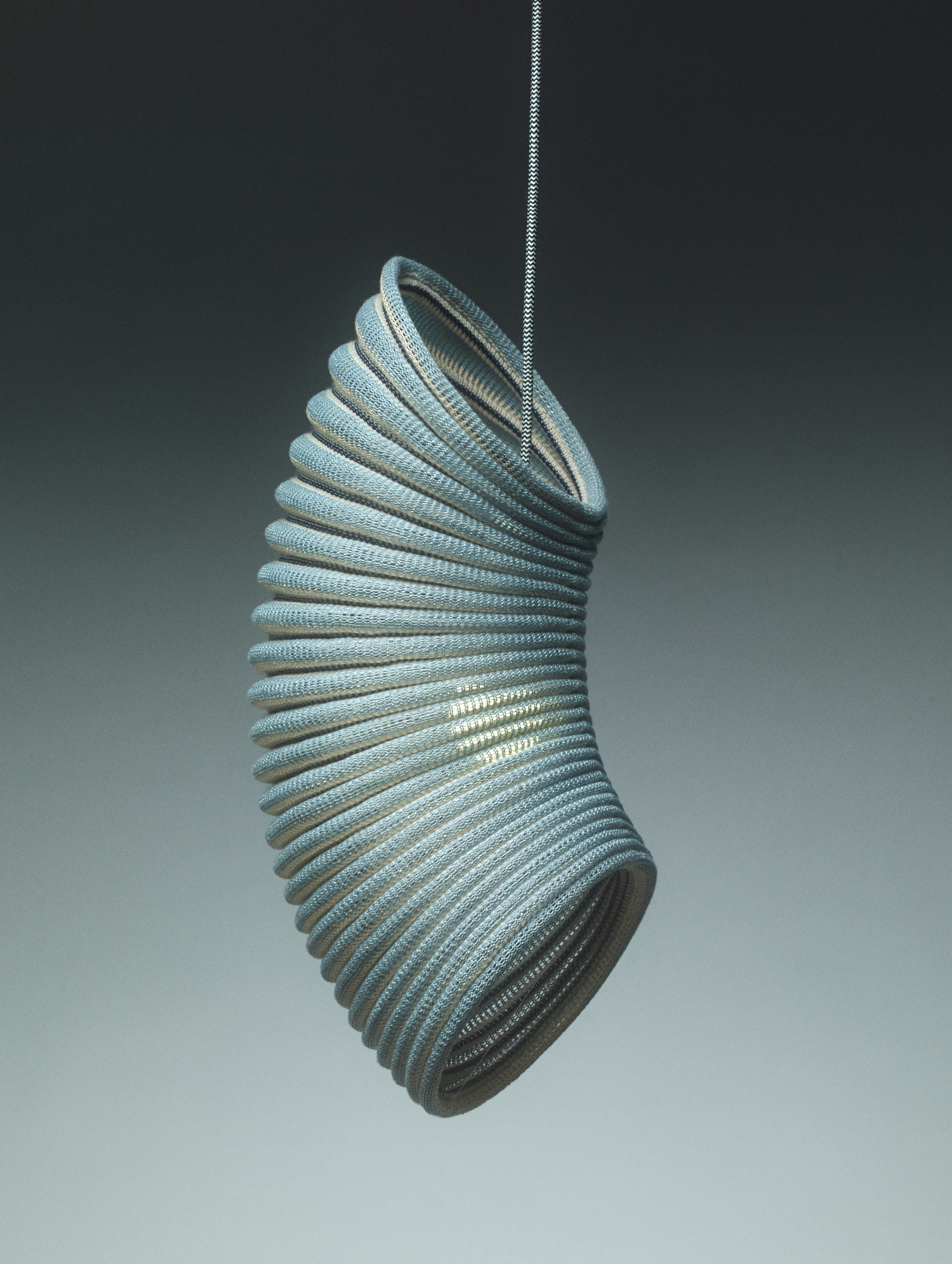
The third category is developed around the cylinder form. By knitting plain knit in a tube and alternating between different fibres, in this case wool and a linen/nylon mix, a pleated surface structure is created. This textile is self-supporting and able to hold its form without a supporting structure. In this case metal rings are added to the openings of the structure to add weight. The variety in yarn fibre, colour, and the way the fabric is bunching up in different parts of the object affects how the light travel over the textile. The high level of transparency allows for the viewer to see the inside of the object and even more clear when the light is shining from the inside.